Starting with the person looking for it
Some teams wanted clearer advice about which platform to use. Others had good reasons for wanting to keep their material in SharePoint. I wanted the discussion to start with the staff experience: could colleagues find the information, understand its context and know who maintained it?
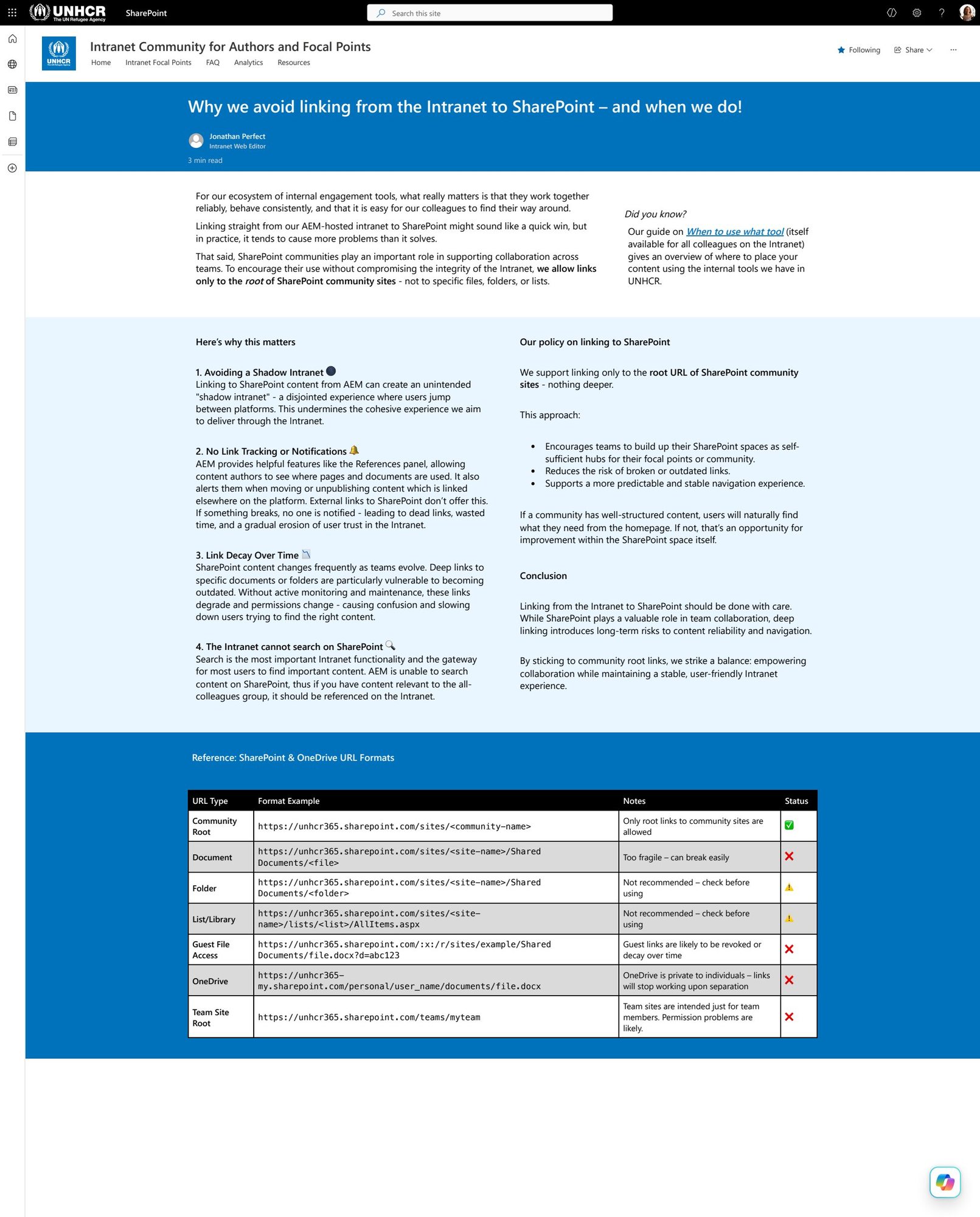
In our setup, intranet search could not search SharePoint. Deep links could break as content moved or permissions changed, and a link straight into a file could leave someone without useful context.
A workable compromise
I spoke to the teams separately, discussed the issue with my manager and team, then brought it to the contributor working group. Explaining the consequences mattered as much as agreeing the rule.
We kept SharePoint as an important collaboration space, while generally linking from the intranet to community roots rather than individual files, folders or lists. Teams retained ownership of their spaces, and staff had a more predictable route into them.
Writing down the reasoning
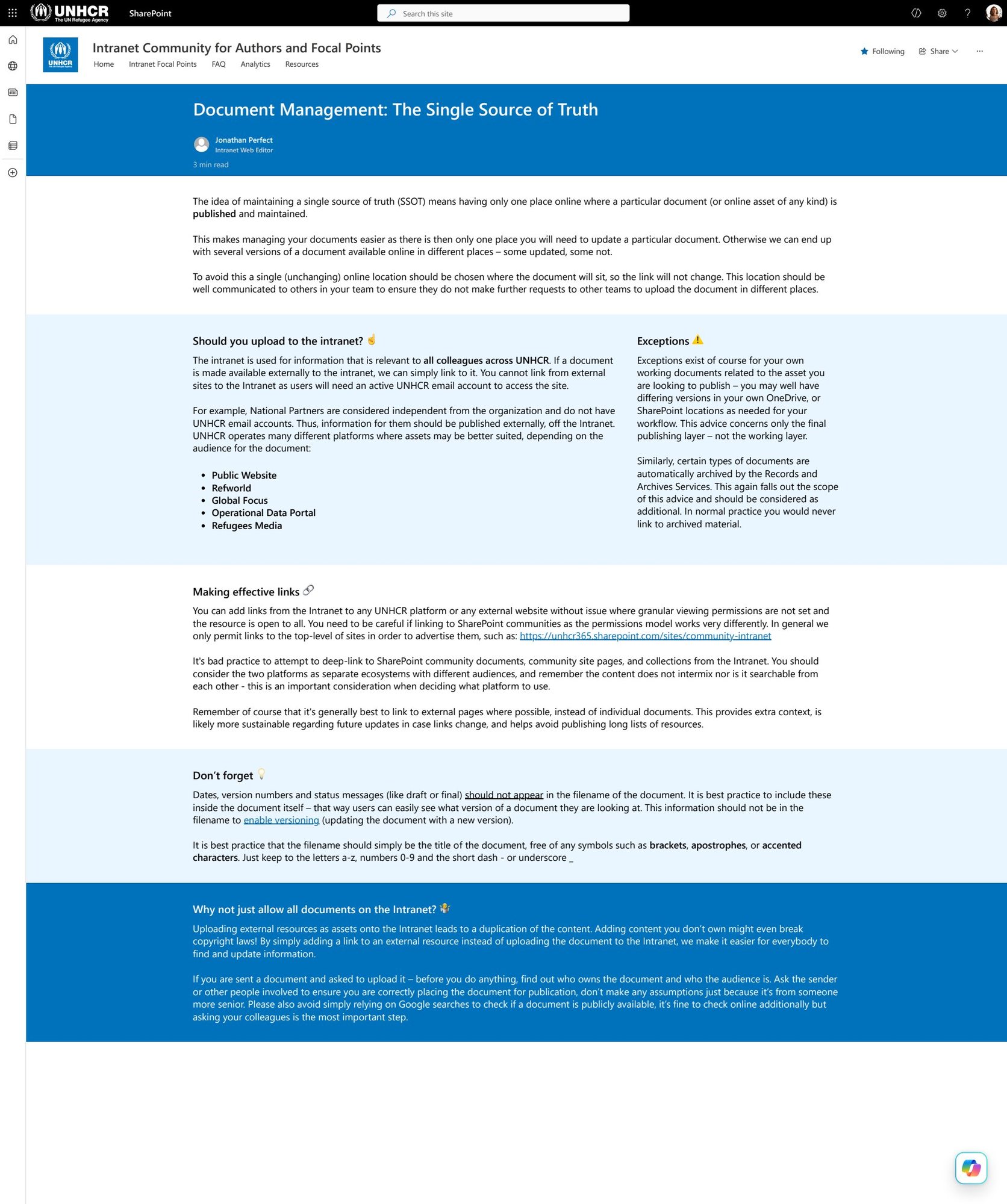
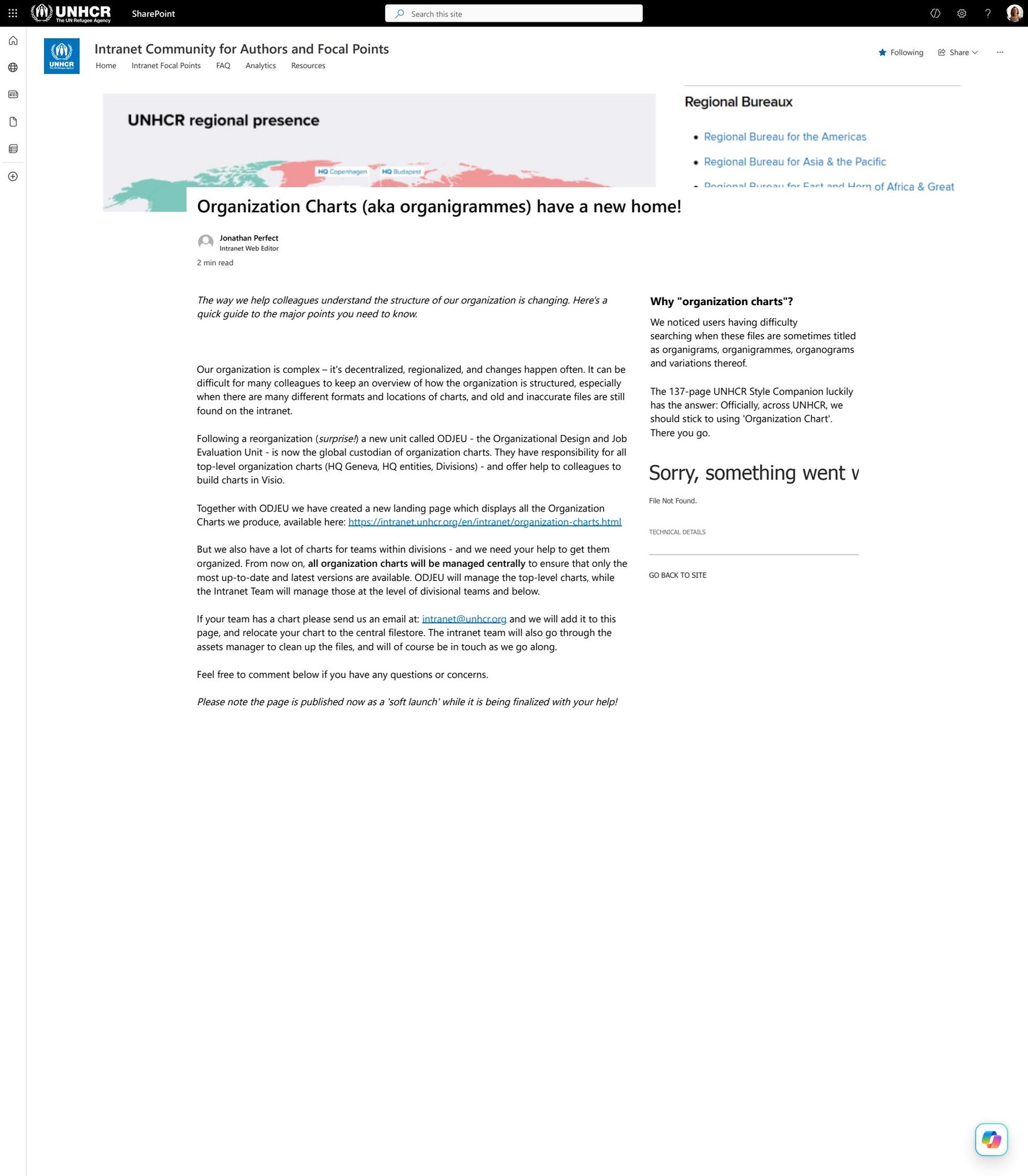
I published guidance explaining the approach and the exceptions. The related articles below show the wider concerns: avoid duplicate publishing, establish a document owner and keep maintained collections in a place people can find.
The organisation-chart example is a small but useful one. Even the name mattered: several competing terms made charts harder to find, so the guidance explained the consistent terminology as well as the new home for them.