It started with search
Colleagues were unhappy with intranet search. My initial assumption was that the search itself needed improvement, but looking at the results showed another problem: it was still finding a lot of old and superseded material.
The UNHCR Manual was a particularly significant example. It had been an ambitious attempt to bring organisational guidance together, but much of the useful information had since moved into intranet pages, specialist portals and other systems. The old chapters were still there, competing with current advice.
Finding someone to own the ending
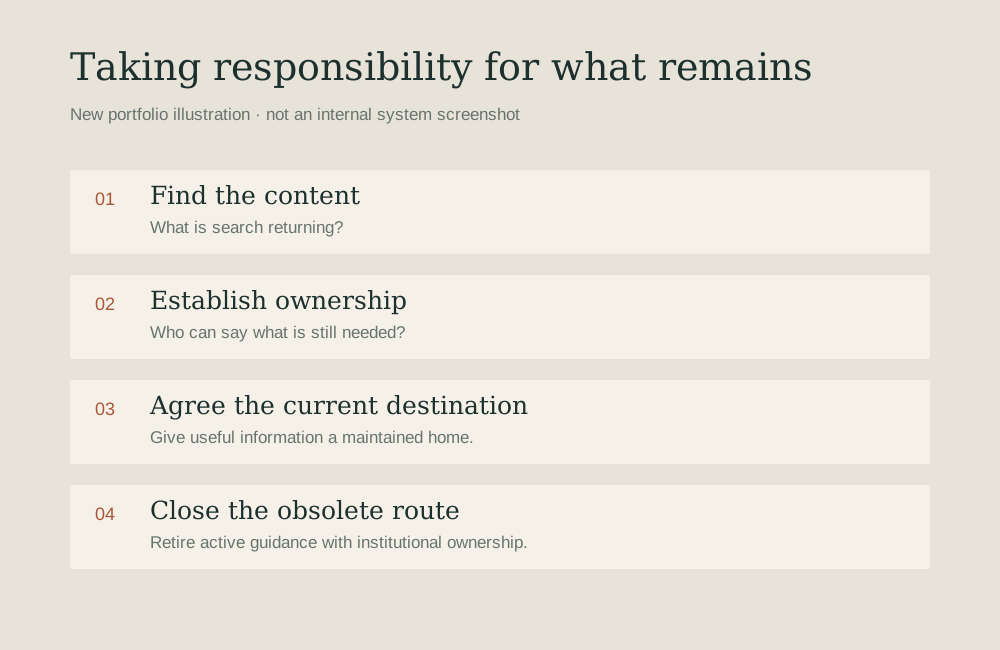
I started a project to retire the Manual formally. There was no single owner who could tell me what remained, so I identified the people responsible for each surviving section and worked through it with them individually. What was still required? Where should colleagues go instead? What could finally be retired?
I had to be persistent. Programme teams are often wary of archiving old content, even when it is no longer the place people should be looking. I kept the central Policy team informed and encouraged them to take formal ownership of the institutional retirement.
Finishing the job
After the first phase, two chapters remained. I worked with their stakeholders to move the information into improved portals and remove its association with the old Manual. That work was completed in time for a new organisational policy framework which formally withdrew it from use.
It was not glamorous work, but it mattered to me. Keeping information useful means dealing with what is already there, including the material nobody is volunteering to close.