Lead the service, not just the homepage.
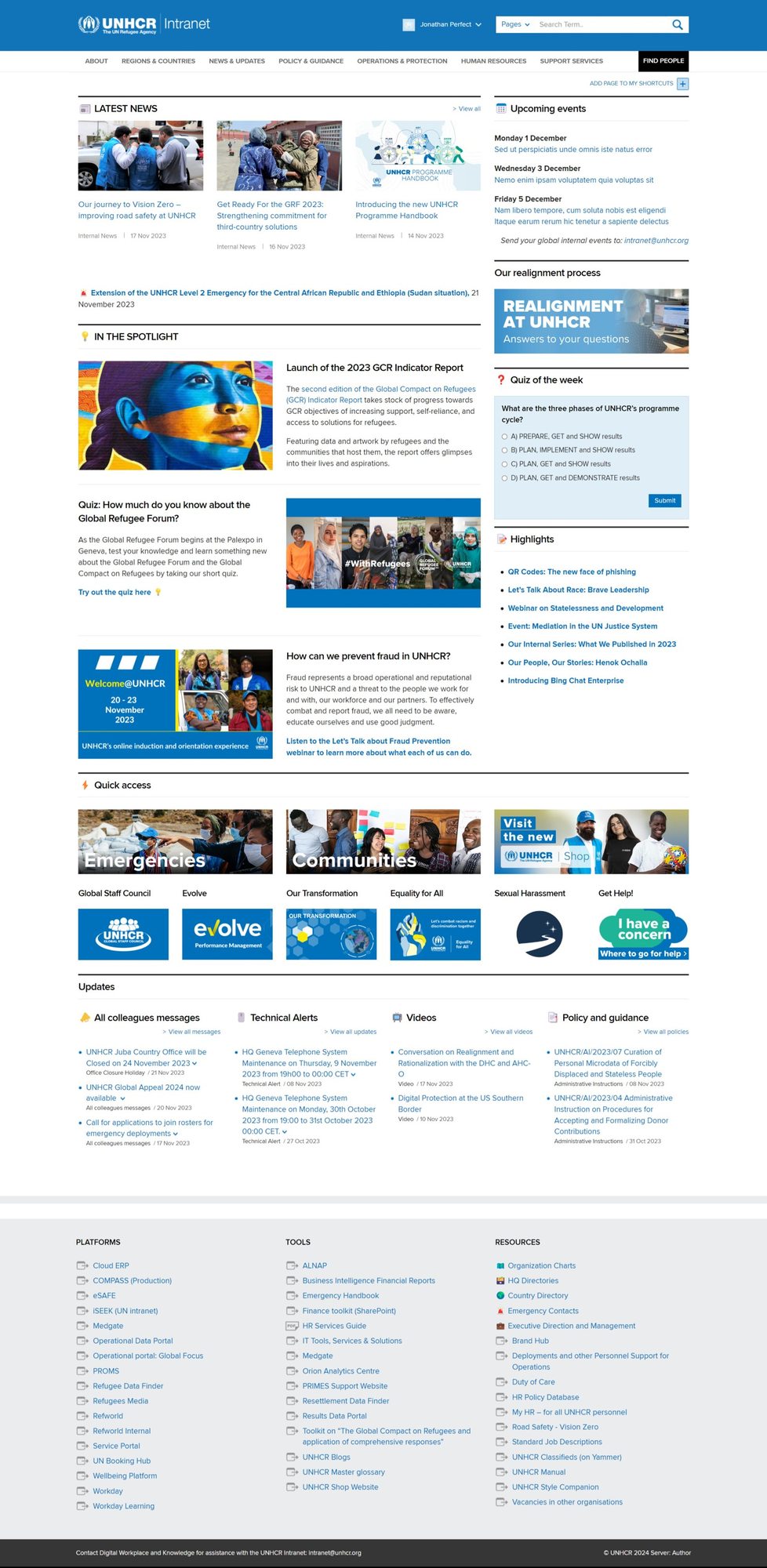
At UNHCR I led the editorial direction and business-side ownership of the global intranet. I set priorities with senior stakeholders and supervised the central publishing team, while a separate network of 250+ publishing focal points retained ownership of specialist content.
The platform served more than 20,000 staff across over 130 countries. Leadership messages, policy updates, campaigns and organisational change all competed for attention. A useful service needed clear decisions, trusted information and people who knew how to publish well.
A small team and a distributed network.
I supervised the day-to-day work of a rotating group of one to three colleagues and one or two interns: allocating tasks, coaching and reviewing editorial work. Supporting the wider focal-point network was a distinct responsibility, involving guidance, training and coordination rather than line management.
I wanted the central team to take a service-minded approach to incoming work while still exercising editorial judgement. That meant understanding what colleagues were trying to achieve, rather than simply publishing requests in the order they arrived.
Making the choices visible.
I created a triage system for new emails and content projects, and maintained open-to-read homepage calendars so teams could see what was coming up. We considered audience need, organisational importance, genuine time sensitivity, placement and lifespan.
When priorities clashed, I spoke to content owners about the objective. Sometimes the right answer was a different format or a different day. Our contributor working group gave people a place to raise priorities, discuss unclear guidance and share examples that worked well.
Governance people could use.
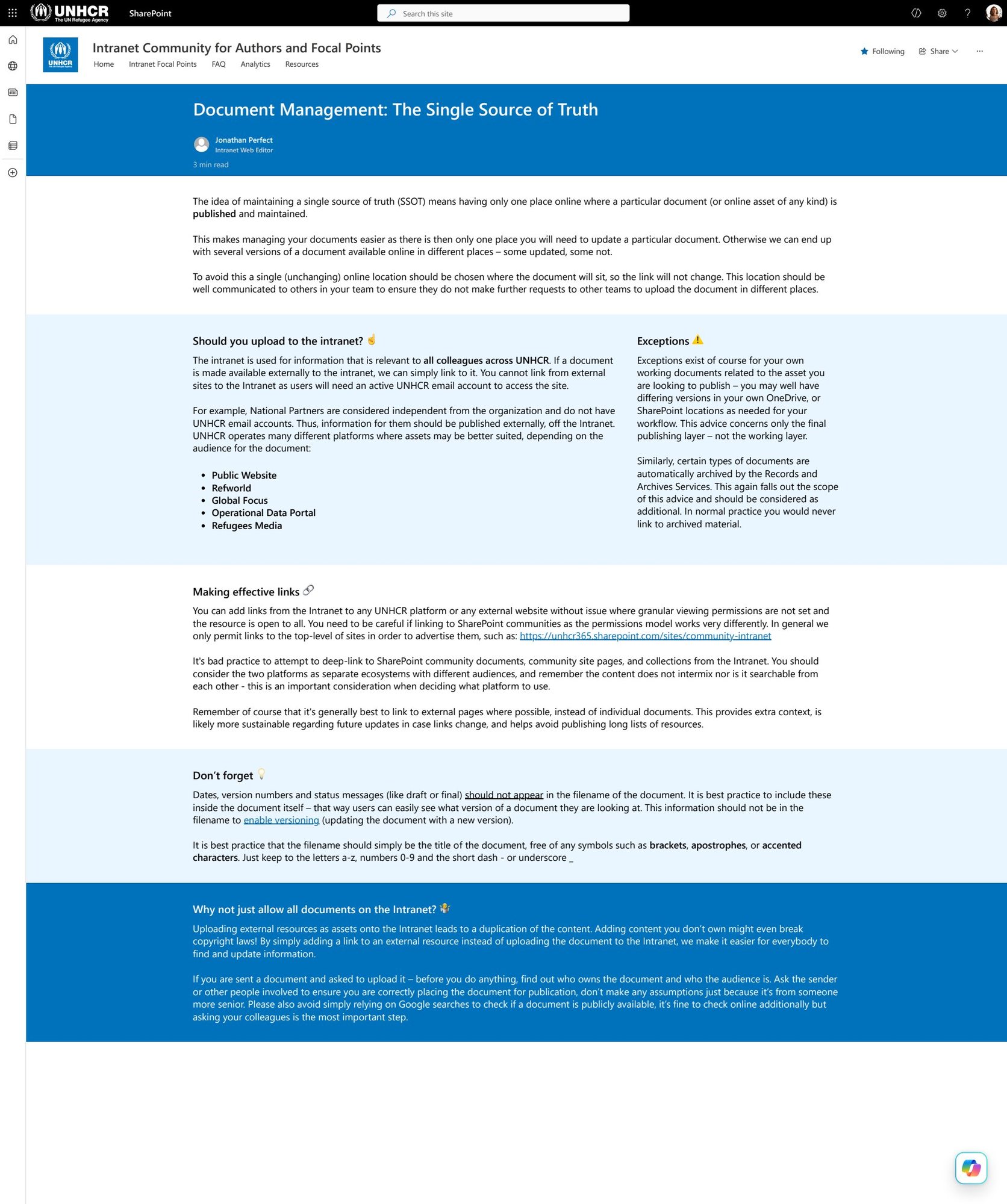
Publishing standards, workflows, training and guidance helped the network work consistently. Contributors remained responsible for the accuracy and maintenance of their material; the central team provided editorial direction and helped make the whole service coherent.
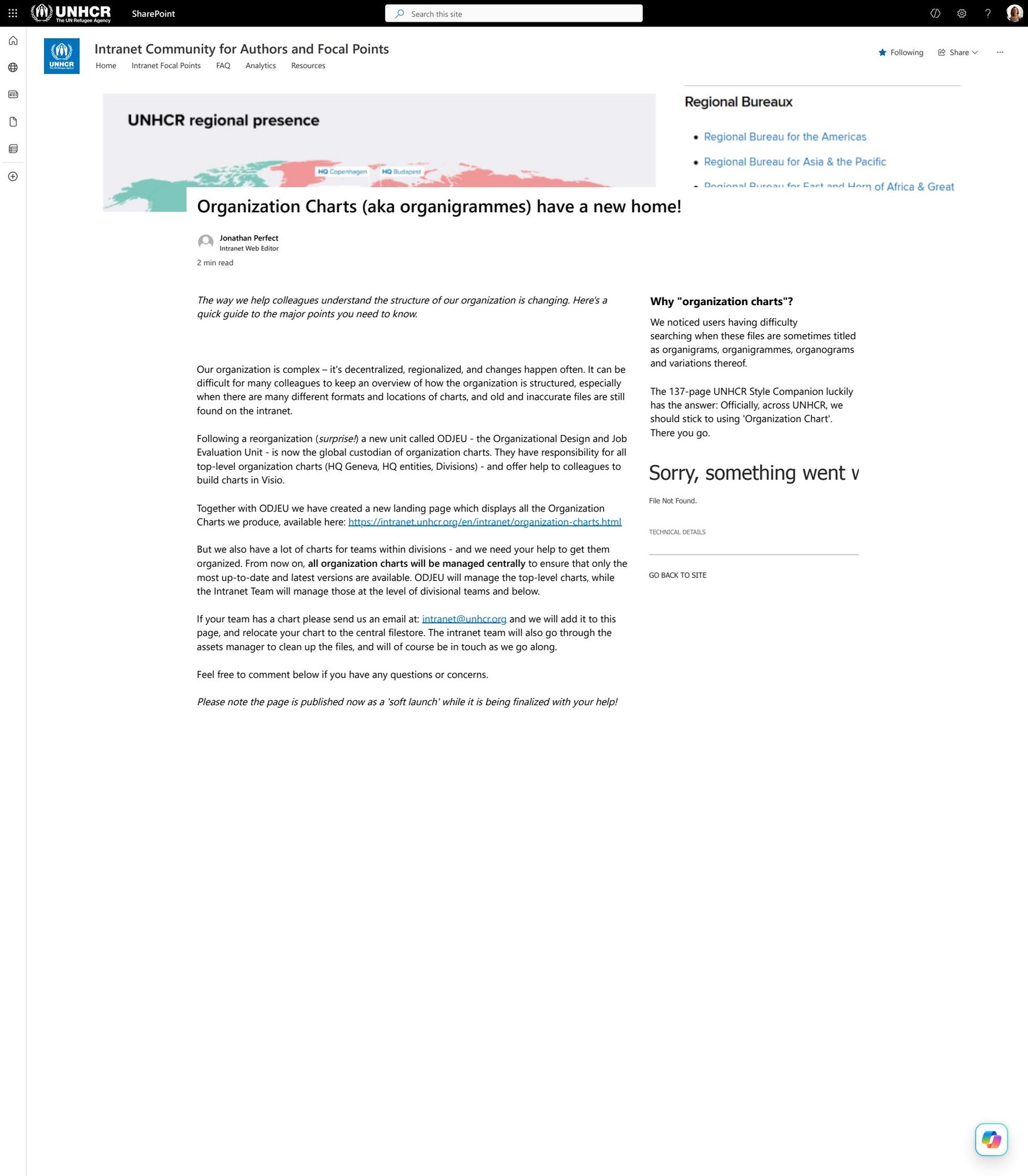
That also meant addressing where information belonged. The intranet and specialist platforms had different purposes. I worked with colleagues on ownership, editorial context and routes that staff could understand.
Improving the routes in.
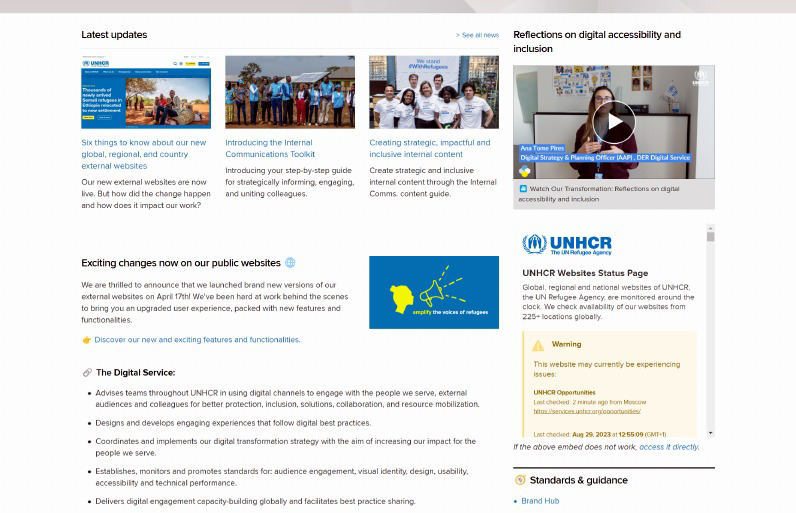
Alongside the daily operation, I led content audits, worked on search relevance weighting and content practices, and led the transition to GA4 to support better-informed prioritisation.
Annual intranet page views grew from approximately 2.5 million to 9 million during my tenure. The figures describe platform use; they do not establish that my work alone caused the increase or that more views meant greater task success.
Editorial leadership during change.
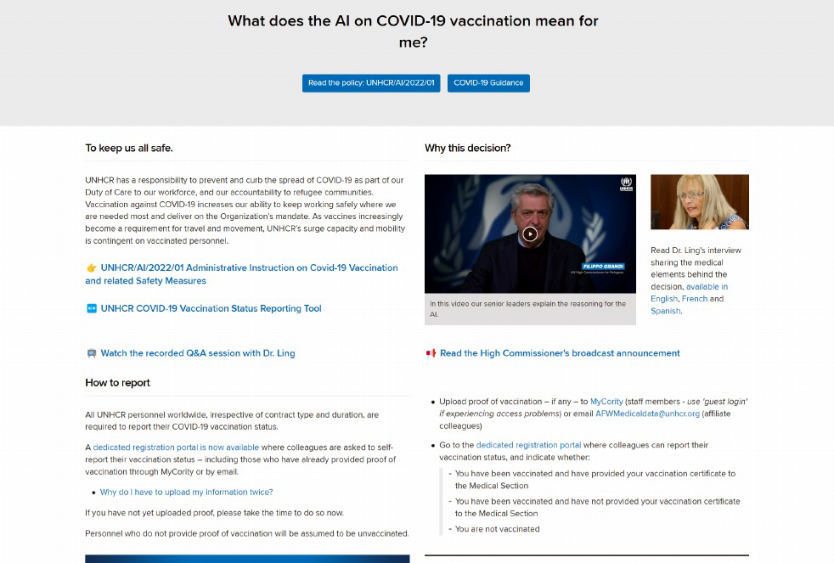
The intranet also had to help staff through urgent or sensitive changes. For COVID-19 policy communications, I turned a complex administrative instruction into a structured employee journey, connecting policy, reporting requirements, leadership explanation and help routes.
Questions and task-based headings brought the policy, FAQs, video, infographic and operational guidance into one coherent information experience.
For the Workday rollout, the same audience-first approach supported digital change within the Business Transformation Programme.